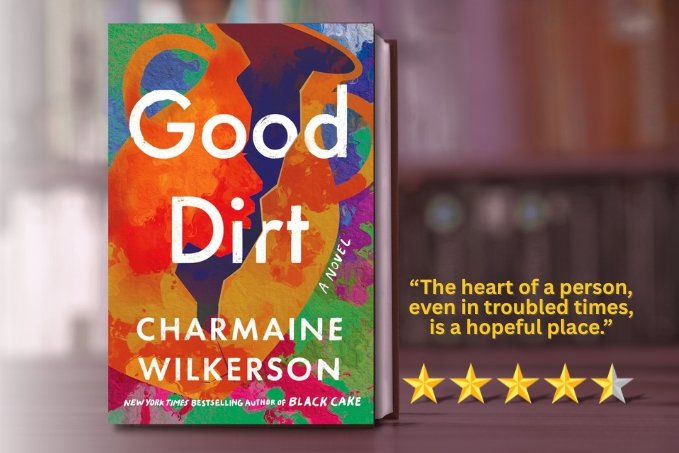

by: Charmaine Wilkerson
published: January 28, 2025
genre: Historical Fiction
346 Pages, E-Book
Goodreads | Amazon

Summary
In present day, Ebony Freeman is reeling from the embarrassment of her failed wedding. Being jilted at the altar is painful enough, but having your name whispered all around town, with eyes on you everywhere you go, is too much for her to bear. Because Ebby, as she’s affectionately called, knows all too well what it’s like to have her name caught up in rumor, gossip, and neighborhood fodder. When she was only ten years old, her brother Baz was murdered in their home—right in front of her—and every day since, Ebby has lived in the not-so-subtle shadow of that tragic day and everything that came after.
The Freemans have a centuries-long history in New England, dating back to an enslaved man named Willis, who escaped the South for the northern territories, where men who looked like him could live freely. He landed in Massachusetts with his Native bride, where they laid down roots and started a family. As a freeman, Willis took on the name Edward Freeman and used his talents and skills to provide for his family, purchase land, and plant seeds for generations of prosperity. Along his journey from South Carolina to New England, Willis carried with him a piece of pottery inscribed by his former brother-in-law. It served as a reminder of everything he had overcome.
Roughly 150 years later, that piece of pottery—Old Mo—would end up in the home of Willis’ great-great-grandson, Ed, and his wife, Soh. For years, the Freemans told stories of Old Mo, weaving tales about their ancestors and the legacy they built. Stories that Ed’s children, Ebby and Baz, cherished. Until that fateful day when masked robbers broke into their home and stole the most precious thing the Freemans had—Baz’s fifteen-year-old life.
Through grief and heartbreak, the Freemans piece together a story of resilience and strength through the retelling of Old Mo, Willis, and all those who came before. The loss of their son affects Ed and Soh in different ways, but somehow, they must find their way back to each other. And when the unthinkable happens to Ebby in front of their affluent friends and family, she has to find something within herself that can bring her back to joy. Fleeing to France to find herself, Ebby ends up discovering far more than she expected—about who she is and how deeply she is rooted in strength.
People were wired to persevere. People were wired for hope. People might feel hurt, but they still liked to laugh. They might lose someone dear, but they still wanted to love.
Character Summary
In 1803, Kandia was taken from her land. She had heard stories of the “people hunters”—kidnappers who dragged you away from your family, never to be seen again. In this new land, Kandia and her unborn child were sold. Upon his birth, her son was named Moses. Kandia made pottery and ceramics for food storage, and later, Moses would grow up doing the same. In 1837, Moses married Flora and befriended his brother-in-law, Willis, who began shadowing him at the pottery.
After saving money from odd jobs and buying a counterfeit slave badge, Willis formed a plan. In 1847, he boarded a boat heading north out of South Carolina, hiding in the ship’s cargo area. He had decided: he would no longer be a slave and would rather jump overboard than go back. After a few years working on boats—knotting rope and making repairs—he set roots in Boston and became Edward Freeman.
When the children of two affluent New England families crossed paths, it wasn’t love at first sight. But everything changed when Isabella “Soh” Bliss saw Old Mo and fell in love with its rich history and the stories behind it—that’s how Edward Freeman III won her over. As a wedding gift, Mr. and Mrs. Freeman—her soon-to-be in-laws—gifted her Old Mo.
Ed Freeman III made a name for himself as an engineer, selling off several patents to the right companies at the right time. Soh did well, too—becoming a top corporate lawyer. Ed and Soh went on to have two children, Ebony “Ebby” and Edward Basil “Baz”. After Baz’s death, she left her high-powered job and only took on select clients.
Nineteen years after witnessing her brother’s death, Ebby still wakes up in a cold sweat. She’s now part editor, part ghostwriter, part researcher for authors and scholars. When she meets Henry Pepper, something shifts. He’s not like the others—he pays attention in a way that melts her. Despite their racial differences, they find a home in each other. Until one day, Henry can’t carry the weight of Ebby’s grief anymore. Unfortunately, that day just so happens to be their wedding day.
My Thoughts
I’ve said before—I love a book that makes me deep-dive and research. Even when I think I know a lot about the transatlantic slave trade, this book uncovered a whole new rabbit hole: pottery made by enslaved people. This type of pottery was known to originate in South Carolina.
South Carolina is central to many African Americans’ connection to this land, and to the lands from which our ancestors were stolen. Nearly 1,000 ships carrying human cargo came through the port of Charleston. At some point in our lineage, many of us can probably trace back to one—or several—people who arrived here that way.
Now, back to the book.
It’s heavy—in terms of words. There are many words. Sometimes, there are words where no words are needed. And often, words are repeated where context would have sufficed. I can’t even estimate how many times “Ebby” was used—it grated on my nerves a bit. But the content of the book? Excellent.
This isn’t quite a split-timeline or dual-narrative novel because—well—everyone gets a voice. The timeline jumps all over the place. Even Henry’s short-lived rebound girlfriend, Avery, gets a chapter, or two. Why? I don’t know. The bouncing between pre–Civil War and modern-day was exhausting. Did it all tie together? Yes. But did it make for easy readability or solid pacing? No. The wide timeline swings and ever-changing narration meant that pacing was inconsistent. Some chapters had me hooked; others dragged on.
Lastly, let me say this: historical fiction about the African American experience can go left real fast (if you know, you know). But this one didn’t. Yes, there’s an awful act alluded to, but nothing written in a way that feels exploitative. There’s no in-your-face, red-hat-wearing racism—the kind that makes your skin crawl. This book is about a family fighting their way back to one another after years of being trapped in their grief.
On another note—why did these folks stop going to therapy?! My people: go to therapy. Even when you think you’re “fixed” or “ready.” Just go. Go to chit-chat. Go to swap recipes. Go to talk about your favorite books. Just keep going. Because one day, you’ll need to be there again—and it’s better if you never stop showing up.
Final Verdict
Liked it a lot. Can you tell by how much I’ve written? Good Lord, am I the drama? Clearly, I’m just as long-winded.



 whitneydaniell
Leave a comment