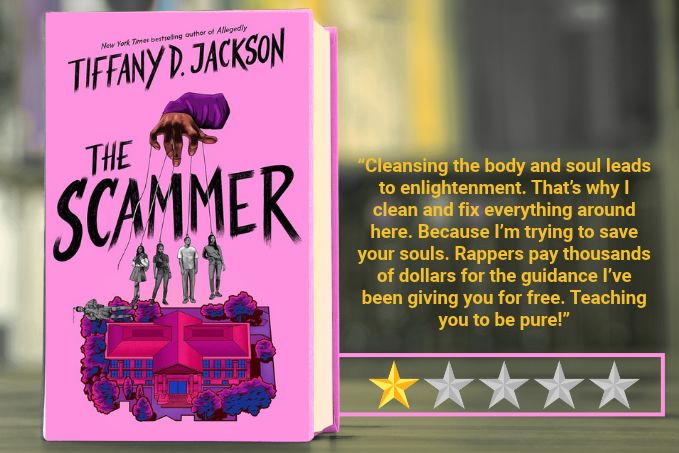
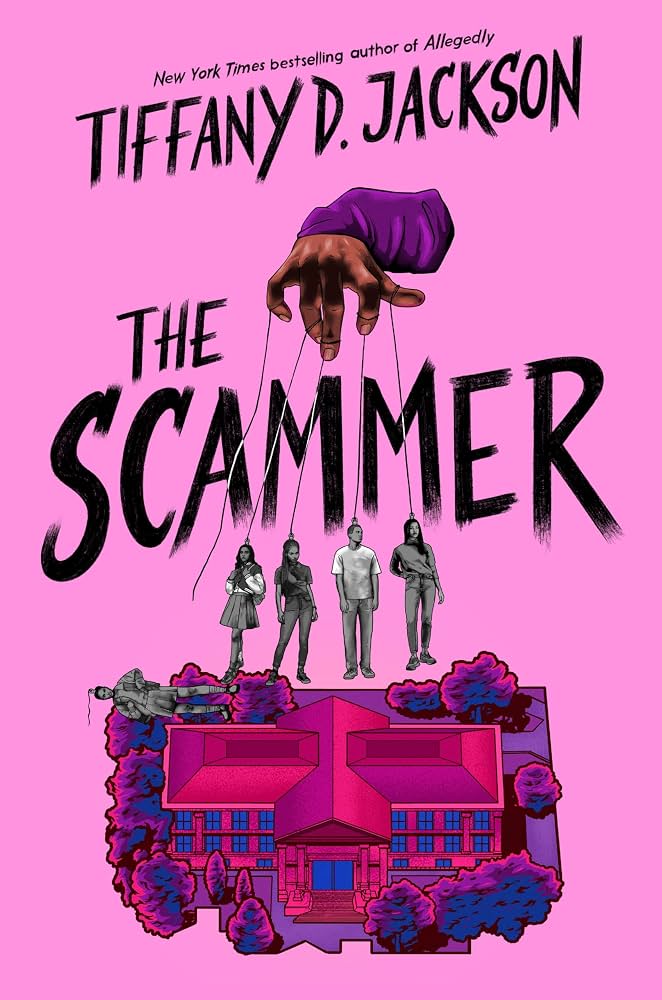
by: Tiffany D. Jackson
published: Ocober 7, 2025
genre: Young Adult, Thriller, Mystery
366 pages, E-Book
Goodreads | Amazon

Summary
Freshman year at Frazier University, a prestigious HBCU in Washington, D.C., is supposed to be Jordyn Monroe’s opportunity to escape her judgmental parents, embrace independence, and begin her prelaw studies. But when her roommate’s recently incarcerated older brother, Devonte, takes up residence in their dorm room, her newfound freedom quickly becomes something far more complicated.
Against the backdrop of racial unrest following a police-involved shooting in Washington, D.C., Devonte begins captivating students with his charismatic speeches about racial injustice, Black empowerment, and the struggles of being Black in America. As his influence grows, Jordyn finds herself torn between her own instincts and the increasingly persuasive rhetoric of a man who seems to have an answer for everything.
When a roommate disappears and unsettling events begin unfolding across campus, Jordyn must confront the possibility that something far more sinister is happening beneath the surface of Frazier University.
Character Summary
Jordyn Monroe — The Sheltered Freshman
Raised by affluent, overprotective parents in Connecticut, Jordyn arrives at Frazier determined to establish her independence. Still grappling with grief, family tensions, and her own insecurities, she’s intelligent but painfully naive about the world beyond her sheltered upbringing. Her desire for acceptance and belonging makes her particularly vulnerable to the people she surrounds herself with. Throughout the novel, Jordyn struggles to reconcile what she’s been taught with what she’s experiencing, often questioning her instincts and judgment along the way.
Loren — The Street-Smart Girl Who Isn’t
Hailing from Harlem, Loren initially gives the impression of someone who should know better than to fall for a smooth talker. After all, New Yorkers have a reputation for being tough and skeptical. Yet Loren doesn’t seem to have the sense God gave a banana peel. Beneath her outward confidence is a young woman whose judgment is surprisingly questionable, making her an easy target for manipulation.
Kammy — The Sheltered Rebel
Coming from a rigid upbringing in St. Louis, Kammy is the quintessential college freshman experiencing freedom for the first time. She’s eager to explore everything her previously structured life denied her, often without considering the consequences. We’ve all known a Kammy, the girl who gets a little taste of independence and immediately makes you wonder how long it’ll be before everything goes sideways.
Vanessa — The Smooth Talker
Vanessa, from Oakland, is the kind of person who can talk her way into or out of just about anything. There’s something about her that never quite sits right, but she’s so persuasive that the longer she talks, the more inclined you are to believe her. As Devonte’s younger sister, Vanessa occupies an interesting position among the roommates, and her loyalty and motivations aren’t always easy to decipher.
Devonte — The Charismatic Manipulator
Recently released from prison, Devonte arrives at Frazier under the guise of needing a temporary place to get back on his feet. Older, intelligent, and undeniably charismatic, he quickly positions himself as a mentor to impressionable students. His commentary on systemic racism, injustice, and Black identity resonates with a campus already shaken by racial tensions. But beneath his seemingly empowering message is a troubling need for influence and control. Devonte embodies the danger of charismatic leadership when persuasive rhetoric begins replacing independent thought.
My Thoughts
I’ve thoroughly enjoyed several of Tiffany D. Jackson’s novels, but unfortunately, The Scammer wasn’t one of them.
For starters, the novel is incredibly dialogue-heavy, with very little of the character development or world-building necessary to make me genuinely invested in the story. The premise is intriguing, particularly its exploration of manipulation, indoctrination, and the vulnerability of young adults navigating independence for the first time. Unfortunately, the execution left much to be desired.
Jordyn, our protagonist, is frustratingly one-dimensional. We’re told she shares a deep connection with her brother and is struggling with grief, yet we’re given very little backstory to establish that emotional bond. There are no particularly heartwarming memories or meaningful glimpses into their upbringing that would allow readers to connect with her loss. Her strained relationship with her parents is equally underdeveloped, leaving her family dynamic feeling more depressing than compelling. Perhaps this was intentional, illustrating how isolation and the absence of familial support can make someone more susceptible to manipulation. If so, I understand the approach, but it ultimately made Jordyn feel hollow rather than sympathetic.
And the supporting characters? Absolutely terrible. Not a single one inspired enough sympathy for me to care whether they made it out unscathed. Even the little goodwill I’d managed to extend to White Boy Nick evaporated after the Thanksgiving trip and the introduction of his “mammy” nanny. Seriously, what was that about? In a novel so heavily steeped in Black empowerment, racial pride, and social commentary, even invoking James Baldwin, why did we need what felt like a white savior narrative? It was an odd creative choice that seemed to undermine some of the very themes the book was attempting to explore.
Another major frustration, and one I frequently encounter in poorly executed thrillers, was the complete lack of believable police involvement. As a native of Prince George’s County, Maryland, trust me, I’m under no illusions about the efficiency of the Metropolitan Police Department. Lazy at best, incompetent at worst. But even with that generous allowance, the lack of urgency surrounding some of the novel’s more serious developments was ridiculous. It takes far too long for anyone to involve law enforcement, and when they finally do, it’s barely acknowledged before the story moves on to something else. By the third act, several significant plot threads are either hastily addressed or left dangling altogether.
Then there’s the sheer implausibility of it all. Having attended college and lived in dorms myself, I found myself repeatedly thinking that 99.9% of what happens in this book would never unfold this way in the real world. Yes, college can be a chaotic, sometimes lawless period in a young adult’s life, but the complete absence of reasonable intervention, accountability, or even basic common sense stretched my suspension of disbelief beyond its limits.
What disappointed me most was the missed opportunity to explore cult-like indoctrination in a more nuanced and realistic way. Manipulation rarely announces itself so loudly or unfolds as blatantly as it does here. The gradual erosion of independent thinking, the exploitation of vulnerability, and the appeal of belonging to something larger than oneself are fascinating subjects, especially within the context of a college campus and the broader social climate. Jackson had the foundation for a genuinely unsettling psychological thriller, but the heavy-handed execution stripped away much of its potential impact.
That said, I started and finished the book, so clearly something kept me turning the pages. The premise was compelling enough to hold my curiosity, even when the characters and plot tested my patience.
All in all, I hated it. The characters were unlikable, the storytelling lacked depth, and the increasingly implausible plot made it difficult to take the underlying message seriously. Still, I’m fully aware that I’m not exactly the target audience for YA fiction, so take my opinion with a grain of salt.
If nothing else, I’m just happy to be back with my nose in a book!





Leave a Reply